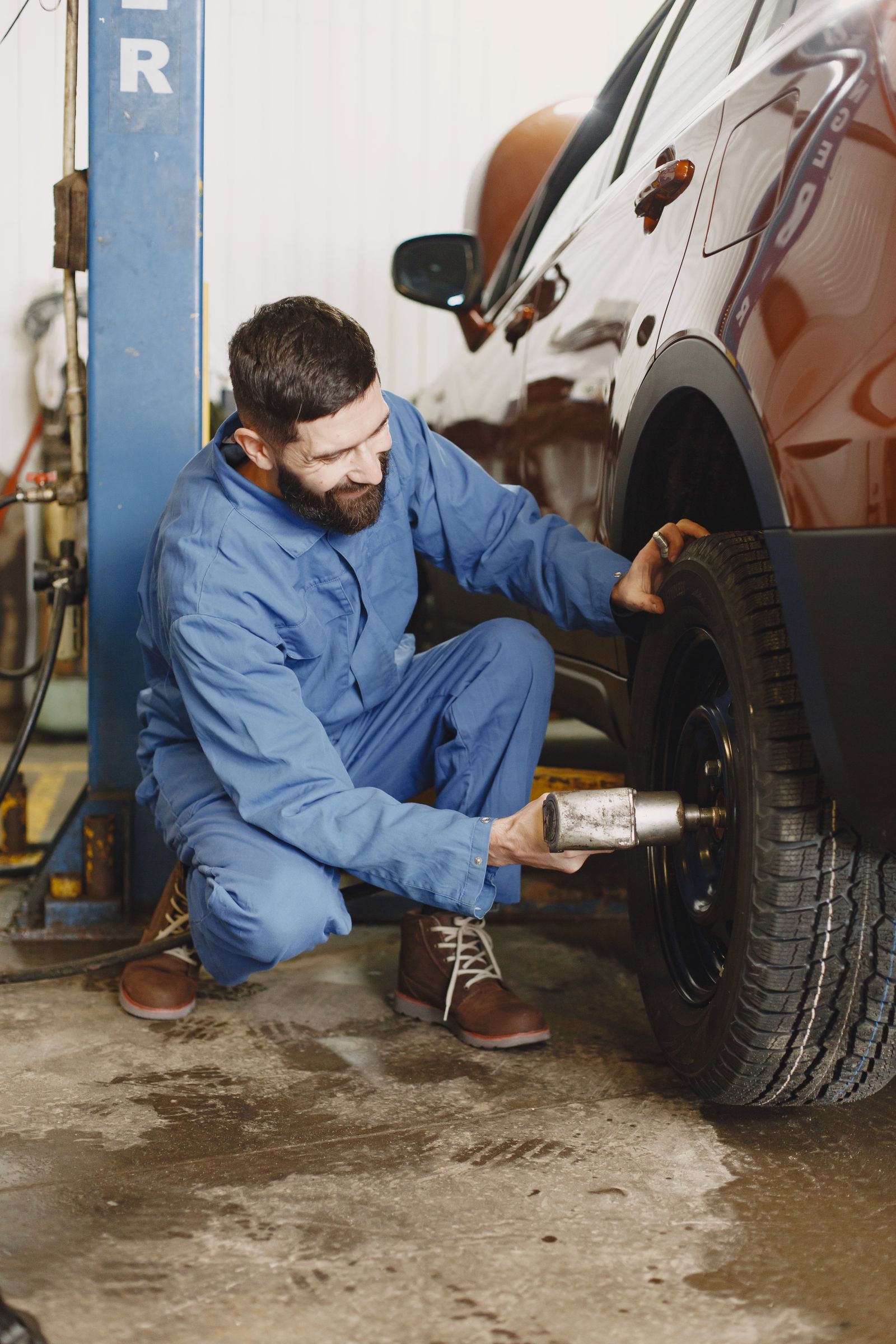
Your tires are the only part of your vehicle touching the road — and on the rain-slick streets of New Westminster, that grip matters more than most drivers realize. Tires don't last forever, and knowing when to replace them is both a safety issue and a legal one in British Columbia. This guide walks you through the signs, the rules, and how New Westminster's unique driving conditions affect tire life.
How to Check Tread Depth — The Quick and the Precise
The simplest DIY test is the penny test: insert a penny into the tread groove with the Queen's crown facing down. If you can see the top of the crown, your tread is below 2/32 of an inch — and your tires are legally worn out in BC. For a more accurate reading, use a tread depth gauge (inexpensive and available at any auto parts store). Measure across several points on each tire — wear is rarely perfectly even.
BC's Minimum Tread Depth: What the Law Says
In British Columbia, the legal minimum tread depth is 3.5 mm (about 5/32") for winter tires when required on designated highways, and 1.6 mm (2/32") for all-season and summer tires under general regulations. If you regularly drive routes like the Queensborough Bridge, Marine Way, or head out toward Highway 1, staying above these minimums isn't just about avoiding a ticket — it's about keeping control when New Westminster's wet autumns and winters make roads slick.
Age Matters: Rubber Degrades Over Time
Even if your tread looks fine, tire rubber compounds deteriorate with age. Most manufacturers recommend replacing tires that are six to ten years old, regardless of remaining tread. You can check your tire's age by finding the DOT code on the sidewall — the last four digits indicate the week and year of manufacture. For example, "3222" means the tire was made in the 32nd week of 2022. Given the damp Pacific Northwest climate, tires in New Westminster can be especially prone to micro-cracking from constant moisture and temperature swings.
Warning Signs You Shouldn't Ignore
- Sidewall cracking or bulging: Cracks indicate dry rot and structural weakening; bulges suggest internal damage — both mean immediate replacement.
- Vibration while driving: If you feel persistent shaking through the steering wheel, especially at highway speeds, it could signal a shifted belt inside the tire.
- Uneven wear patterns: Cupping, feathering, or one shoulder wearing faster than the other often points to alignment or suspension issues — but the damaged tire still needs replacing.
- Frequent pressure loss: A tire that needs air every few days likely has a slow leak or bead-seal problem that may not be repairable.
What New Westminster Roads Do to Your Tires
New Westminster's mix of steep hills, frequent stop-and-go traffic along Columbia Street and 6th Street, and the rough industrial stretches near the waterfront all accelerate tire wear. Add in the region's heavy rainfall from October through March, and you're asking a lot from your rubber. Tires with marginal tread simply cannot channel water effectively, dramatically increasing your risk of hydroplaning on roads like Royal Avenue or McBride Boulevard after a downpour.
When to Come In for a Professional Assessment
If you're unsure about your tires' condition — or if you've noticed any of the warning signs above — a professional inspection takes only a few minutes and gives you peace of mind. At Safari Auto Tires in New Westminster, our team can measure tread depth, spot hidden damage, and help you decide whether it's time for a new set. Visit us at 1025 Quebec Street or give us a call at (604) 544-4040 — we'll help you drive safer, rain or shine.