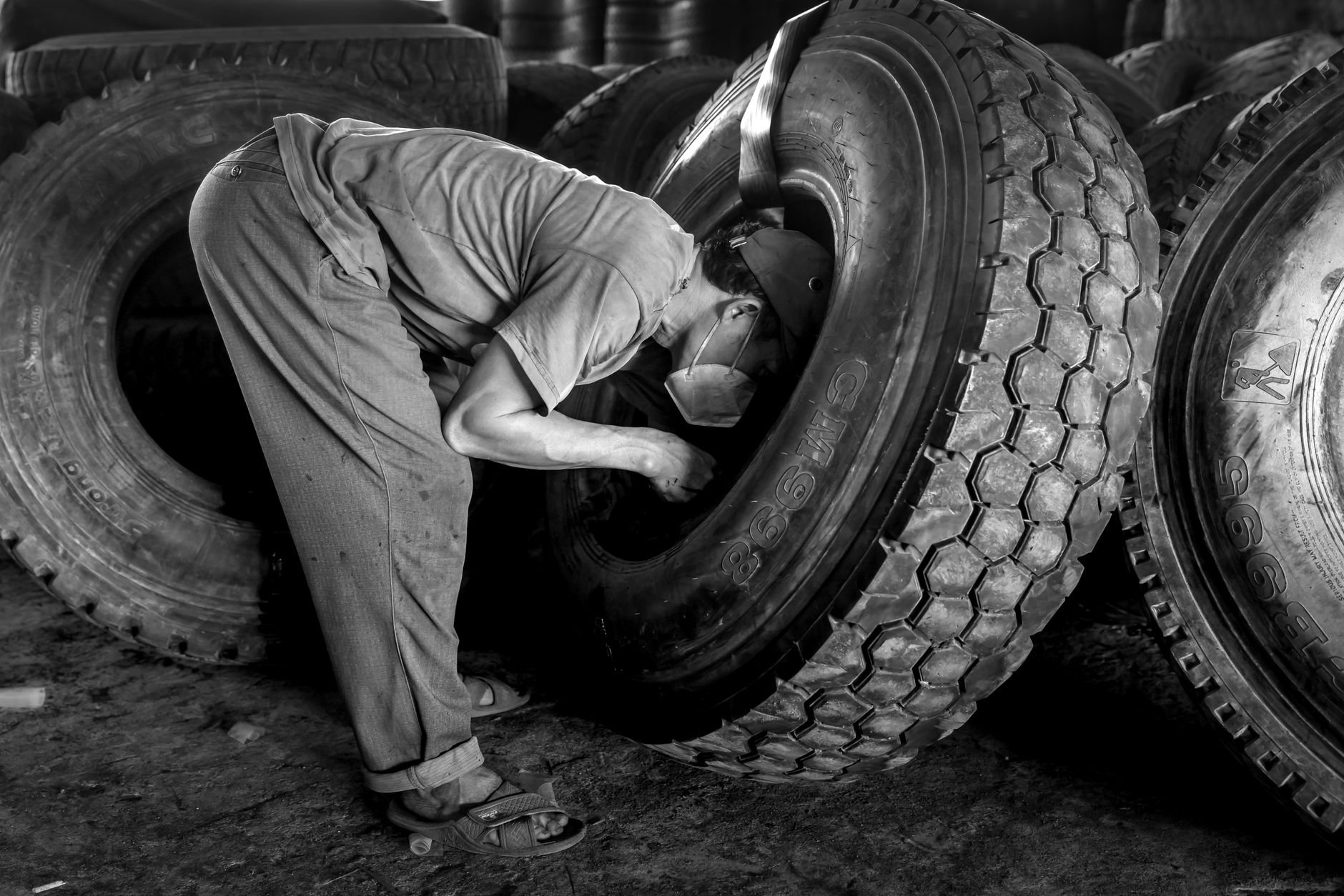
You're driving down Columbia Street or merging onto the Pattullo Bridge when you notice it — a low hum, a rhythmic thumping, or an increasingly loud roar coming from your tires. It wasn't there before, or maybe it's been getting worse. Either way, tire noise isn't just an annoyance; it's often your vehicle's way of telling you something needs attention. Here's what different tire sounds mean, what causes them, and when New Westminster drivers should bring their vehicle in for a professional inspection at Safari Auto Tires.
Why Tires Make Noise in the First Place
All tires produce some sound as they roll — it's the result of rubber meeting pavement, air being compressed inside tread grooves, and the tire's tread pattern interacting with the road surface. But when the noise changes — becoming louder, developing a distinct rhythm, or turning into a vibration you can feel through the steering wheel — it's time to pay attention. New Westminster's mix of wet roads, aging infrastructure, and frequent construction zones means local drivers encounter conditions that can accelerate tire wear and noise issues faster than you might expect.
Common Tire Noises and What They Usually Mean
Humming or Droning Sound That Increases with Speed
A steady hum that gets louder as you accelerate is one of the most common tire noise complaints. The most likely culprit is uneven tread wear. When tires wear irregularly — often due to skipped rotations, misalignment, or underinflation — the tread blocks strike the road at slightly different heights, creating a droning hum. In some cases, a worn wheel bearing can produce a similar sound, so it's worth having a professional distinguish between the two. Safari Auto Tires can inspect your tread wear patterns and wheel bearings to pinpoint the source.
Rhythmic Thumping or Thudding (Like a Flat Spot)
A repetitive thump-thump-thump that follows your vehicle's speed is almost always a tire issue. Common causes include a flat spot from hard braking, a bulge or bubble in the tire sidewall (often from pothole impact — and New Westminster has plenty of those along Front Street and the industrial areas), or a separated tread. A separated tread is a serious safety hazard: the internal layers of the tire are coming apart, and the tire could fail at any moment. If you hear rhythmic thumping, don't wait — get it checked immediately.
Roaring That Sounds Like Aggressive Off-Road Tires
If your everyday all-season tires suddenly sound like mud-terrain tires on the highway, you're likely dealing with heel-toe wear or cupping. Cupping — also called scalloping — creates high and low spots around the tread and produces a distinctive growling roar. It's typically caused by worn suspension components (shocks or struts) that allow the tire to bounce slightly as it rolls. Left unchecked, cupping will ruin a set of tires prematurely and mask a suspension problem that needs repair.
Squealing on Turns at Normal Speeds
A squeal during everyday cornering — not the dramatic screech of aggressive driving — often points to underinflation or alignment issues. Underinflated tires flex more in corners, causing the tread to scrub against the pavement. If your tire pressure is fine, the squeal may indicate toe misalignment, where your tires are pointing slightly inward or outward instead of straight ahead.
When Tire Noise Is Normal (and When It Isn't)
Some tires are simply louder by design. Performance tires with aggressive tread patterns, winter tires with deep siping, and all-terrain tires all produce more road noise than standard touring all-seasons. If you recently switched tire types and noticed an increase in noise, that may be expected. But if your existing tires have become louder over time, that's a change worth investigating — it almost always signals wear, damage, or a mechanical issue.
What to Do If Your Tires Are Making Noise
Start with a visual inspection: check for uneven wear, bulges, cracks, or embedded objects. Verify your tire pressure matches the manufacturer's recommendation (found on the sticker inside your driver's door jamb, not the number on the tire sidewall). If everything looks normal but the noise persists, the next step is a professional diagnosis. At Safari Auto Tires on Quebec Street, our team can assess tread wear patterns, check alignment and suspension, and let you know whether the noise is harmless or a sign that your tires — or something else — need attention.
Driving on noisy tires without understanding the cause is a gamble. Sometimes it's just an annoyance; other times it's the early warning of a tire that's about to fail on Kingsway during rush hour. If your tires don't sound right, give us a call at (604) 544-4040 or visit us at 1025 Quebec Street in New Westminster. A quick inspection is always cheaper — and safer — than a roadside emergency.