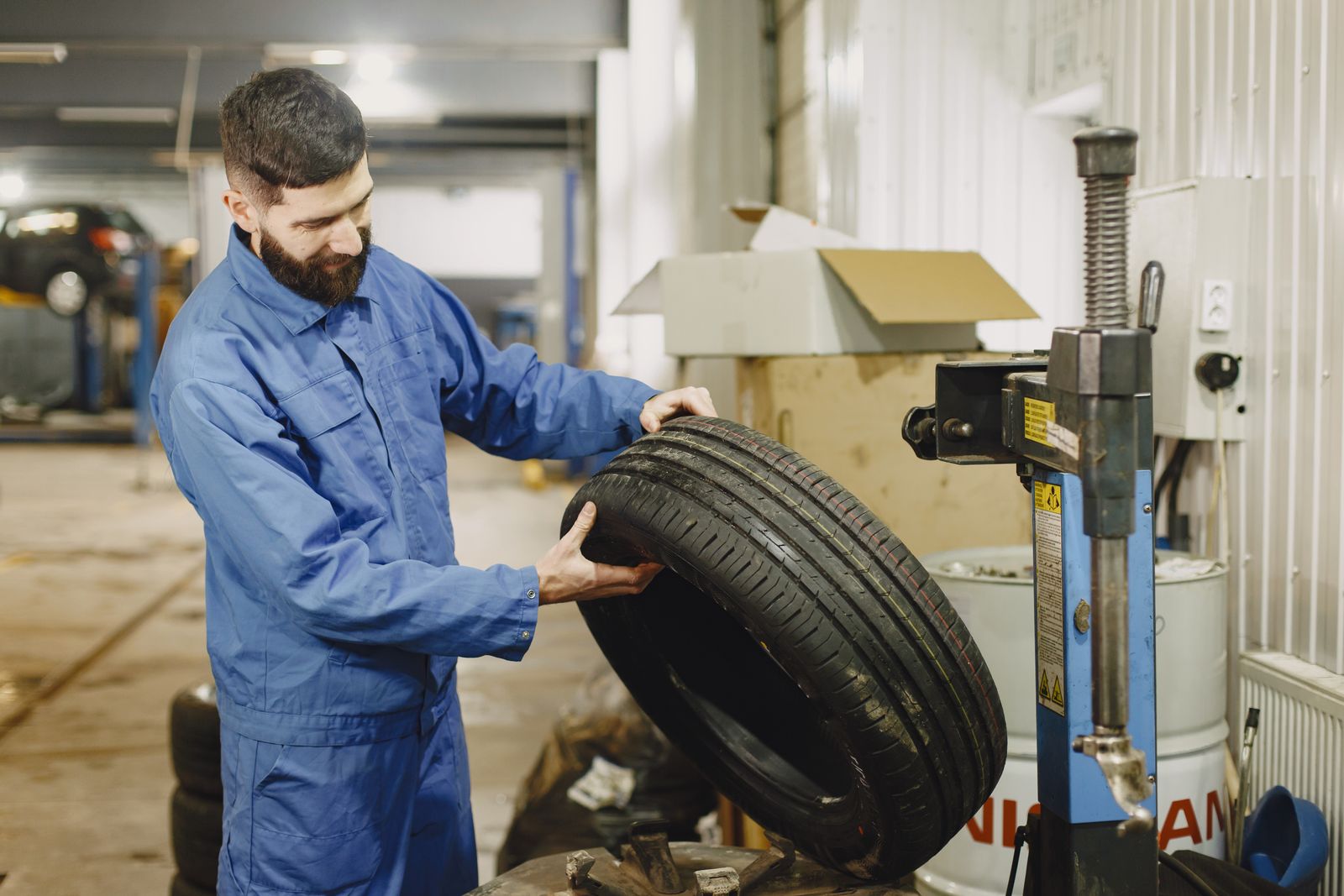
Every tire on your vehicle has a story to tell — it's written right on the sidewall. Those raised letters and numbers may look like a secret code, but once you know how to read them, you can quickly check the size, age, and capabilities of any tire. For drivers in New Westminster, BC, understanding your tire sidewall means making smarter decisions when it's time for a replacement or seasonal swap. Here's how to decode what your tires are telling you.
Breaking Down the Tire Size Code
The largest sequence on your sidewall looks something like this: P225/65R17 102H. Each segment has a specific meaning.
- P — This stands for "P-metric," meaning the tire is designed for passenger vehicles. You may also see "LT" for light trucks, or no letter at all for a European metric designation.
- 225 — The section width in millimetres, measured from sidewall to sidewall. Wider isn't always better; it needs to match your vehicle's specifications.
- 65 — The aspect ratio. This is the height of the sidewall expressed as a percentage of the width. Here, the sidewall height is 65% of the 225 mm width. A lower number means a shorter, sportier sidewall.
- R — Radial construction. Nearly all modern passenger tires use radial construction, so you'll almost always see an "R" here.
- 17 — The rim diameter in inches. This tells you what size wheel the tire fits. Putting a 17-inch tire on a 16-inch rim simply won't work.
- 102 — The load index. This is a numerical code that corresponds to a maximum weight the tire can carry. A 102 rating means 850 kg (1,874 lbs) per tire. Always choose a load index that meets or exceeds your vehicle manufacturer's recommendation.
- H — The speed rating. H-rated tires are certified for sustained speeds up to 210 km/h. Common ratings range from S (180 km/h) to Y (300 km/h). While few of us drive at these speeds, the rating also reflects the tire's overall performance and heat tolerance capabilities.
Finding the Tire's Age: The DOT Code
Near the edge of the sidewall you'll find a code that starts with "DOT" — the Department of Transportation certification. The last four digits of this code are your tire's birth certificate.
A DOT code ending in 3522 means the tire was manufactured in the 35th week of 2022. Tires age even when they're not being driven, and most manufacturers recommend replacement after six to ten years regardless of tread depth. In New Westminster's damp climate, rubber can degrade faster due to moisture exposure and temperature swings between the Fraser River's cool air and warmer inland conditions, so checking the age of your tires is especially important.
Treadwear, Traction, and Temperature Grades
The Uniform Tire Quality Grading (UTQG) system appears on most passenger tires sold in Canada. You'll see three ratings:
- Treadwear — A comparative number, not a mileage guarantee. A tire rated 400 should theoretically last twice as long as one rated 200 under controlled test conditions. Real-world results vary with driving habits and road conditions.
- Traction — Rated AA, A, B, or C, this measures wet braking performance. For New Westminster's famously rainy winters, an A or AA traction rating is a smart choice.
- Temperature — Rated A, B, or C, this reflects the tire's ability to dissipate heat at speed. An A rating is the highest.
The M+S and Three-Peak Mountain Snowflake Symbols
If you see M+S (Mud and Snow) on the sidewall, the tire has a tread pattern with some snow capability. However, this is not the same as a true winter tire. The symbol that matters most for BC winter driving is the three-peak mountain snowflake — a pictogram of a mountain with a snowflake inside it. This indicates the tire has passed specific snow-traction testing and meets the legal requirements for winter tire designations on BC highways between October 1 and March 31.
If you regularly cross the Port Mann Bridge or head up toward Burnaby Mountain during the winter months, having tires with the three-peak symbol gives you both legal compliance and genuine cold-weather traction.
Get Help Decoding Your Tires in New Westminster
Reading a sidewall is a useful skill, but you don't have to do it alone. The team at Safari Auto Tires helps New Westminster drivers choose the right tires for their vehicles, driving habits, and budget — and they'll explain exactly what every marking means. Stop by 1025 Quebec St, New Westminster, BC or call (604) 544-4040 for straightforward advice and professional tire service.